

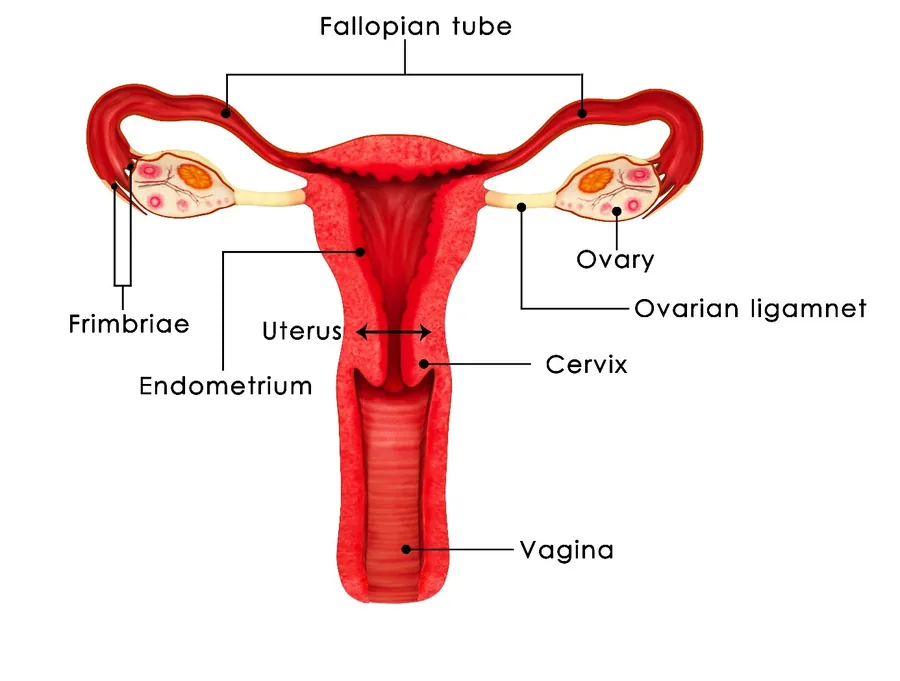
What Is the Vagina?
The vagina is a muscular, canal-shaped organ of the female genital system extending from the cervix of the uterus to the outside of the body. It is usually 9-10 centimeters long, and its walls are lined with a mucous membrane. The cervix protrudes slightly into the vagina, and at the very center of this protrusion there is a small opening called the external os. After intercourse, sperm pass through this opening and travel toward the internal reproductive organs. The inner surface of the vagina contains mucosal folds called rugae. Small glands between these rugae secrete the substances that provide lubrication during intercourse and childbirth, and the rugae create a textured surface during friction; during childbirth they allow the vagina to expand like an accordion, making the baby's delivery possible.
There is no bony structure around the vagina; instead, muscles and collagen-rich connective tissue serve as its support.
How Does the Vagina Stretch?
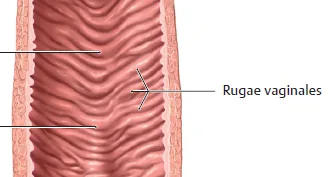
The vagina is a tube-shaped organ made of muscle and connective tissue, and because there is no bone around it, these muscles and connective tissues loosen with advancing age, an increasing number of childbirths, menopause, frequent intercourse and repeated gynecological examinations. Pregnancy also increases vaginal laxity; the vagina can stretch even without a vaginal delivery.
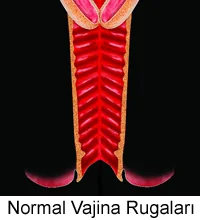
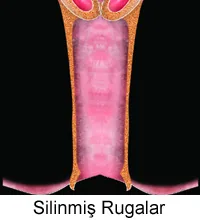
With advancing age, not only does the vagina loosen, but the rugae also fade, and the vagina effectively becomes a smooth tube. The male partner perceives this as a reduced sensation of friction. In women it causes loss of sensation during intercourse, vaginal dryness, pain and burning.
In some young women who have never had an abortion or given birth, the vagina can be congenitally wide and soft. This condition is also called a "wide and smooth vagina". The problem shows itself from the first years of sexual activity as inability to enjoy intercourse, inability to feel the penis, and inability to reach orgasm. Laser vaginal tightening is an excellent option for these patients too.
What Is Vaginal Tightening? Who Is It For?
We use the term vaginal tightening, or vaginoplasty, for all operations that aim to correct vaginal laxity, deformities and prolapse and to restore normal sexual function.
To better understand vaginal issues, we must first identify the possible problems. These may include:
- A feeling of looseness during intercourse
- Excessive wetness
- Loud sounds during intercourse
- A burning sensation during intercourse
- Bleeding during intercourse
- Deformity of the outer part of the vagina
- A poorly healed episiotomy scar
Once the problems are identified, we plan the appropriate treatment. Let us examine each of them in detail together.
If there is a feeling of looseness during intercourse
The patient often cannot fully judge the degree of vaginal laxity herself. If the laxity is mild, laser vaginal tightening is applied. If the laxity is more advanced, vaginal tightening surgery should be performed.
If there is excessive wetness
In patients complaining of excessive wetness, we first need to determine whether the problem is truly excessive wetness or a vaginal infection. Some infections can cause watery discharge. We can assess this with a vaginal examination. If the problem is a vaginal infection, it is treated with antibiotics and vaginal suppositories. If it is not an infection and there really is excessive wetness during intercourse, we can resolve the problem with laser treatment.
If loud sounds occur during intercourse
Occasional sounds during intercourse are normal. After all, the vagina is an organ open at one end and closed at the other. Air that enters during intercourse has to come out. If the outer part of the vagina has been narrowed without addressing the inner part (over-tightening of the entrance after childbirth, poorly performed vaginal tightening operations, etc.), the air trapped inside can make noise as it escapes through the narrow outer section. If the sounds are not excessive, we can tighten the deeper part of the vagina with laser treatment. If laser treatment is not sufficient, or if the inner part of the vagina is excessively wide, we can solve this problem with vaginal tightening surgery.
If there is a burning sensation during intercourse
In younger patients, vaginal burning is usually caused by vaginal infections. In that case we treat with antibiotics and vaginal suppositories. With advancing age, as the estrogen hormone declines, the vaginal tissue can become dry, undernourished and devitalized, and burning may develop. The vagina may narrow, its folds may flatten, discharge and burning may occur, and bleeding may occur during intercourse. This condition is called vaginal atrophy. In treating vaginal atrophy we generally use hormone-containing suppositories and creams. This group of patients benefits greatly from laser treatment, because the laser triggers renewal and rejuvenation of the vaginal mucosa.
If bleeding occurs during intercourse
Dark-colored bleeding during intercourse right after a period is normal. Blood that has remained in the uterus and has not yet been expelled can be released through intercourse.
Fresh bleeding seen during or after intercourse is a symptom that must be taken seriously, because it can point to a problem with the cervix. It is important not to neglect it. When a patient presents with bleeding during or after intercourse, we first perform an examination. If the bleeding originates from an erosion or lesion on the cervix, we carry out the relevant tests: an HPV test, a smear test, colposcopy and, if necessary, a biopsy.
If the problem does not originate from the cervix, we then try to locate the source of the bleeding. It may come from a tear in the vaginal walls, which we can repair with sutures. Small tears and bleeding may also have occurred at the outer part of the vagina due to narrowness. We can treat this with hormone-containing creams or, in some cases, with an operation.
If there is a deformity of the outer part of the vagina
Vaginal deformities are usually seen in women who have given birth at home. They can also result from birth tears that were never sutured. This problem can only be solved with surgery. The unsutured areas must be reopened and stitched again, and the deformities corrected patiently. Corrective procedures on the outer part of the vagina are called perineoplasty.
If there is a poorly healed episiotomy scar
Episiotomy sutures can sometimes open due to infection or inadequate wound care, and an opened episiotomy may heal badly. Sometimes the body reacts to the sutures used during the episiotomy, leaving an unsightly scar. The treatment is to open the episiotomy scar and re-suture it in accordance with the anatomy. This procedure is also called perineoplasty.
In conclusion, vaginal problems must first be identified through proper evaluation and diagnosis. Depending on the cause and severity of the problem, various treatments can be applied, such as laser therapy, vaginal suppositories, antibiotics, hormone-containing creams or surgery. Throughout this process, it is important for patients to communicate openly with their doctors and share their concerns and expectations.
Until a few years ago, vaginal tightening operations were dismissed as unnecessary even by doctors. But women are far from content with a lax vagina and the reduced pleasure it brings to intercourse, and they are showing ever greater interest in vaginal tightening. In this context, fractional laser vaginal tightening goes a long way toward meeting these expectations.
Let us determine the right treatment for your vaginal laxity concerns together; contact us for an examination and more information.
Book via WhatsApp Call Now