
Table of Contents
What Does Fractional CO2 Laser Mean?
Since the CO2 laser was first used in 1973 to treat cervical erosions, laser technology has been widely used in gynecology. Although lasers were very popular toward the end of the 1980s, the drive to cut healthcare costs in the early 1990s shifted attention toward more economical technologies, reducing interest in and use of laser energy. Today, laser technology has advanced considerably, regained its popularity, and earned its rightful place in many branches of medicine.
The CO2 laser has a wavelength of 10600 nm. With a penetration depth of 0.1-0.5 mm and adjacent thermal damage of only 0.5 mm, it is an extremely safe method. This safety allows it to be used in delicate areas where electrocautery is unsuitable, such as the bladder, ureter and bowel serosa. Beyond vaporization, the CO2 laser can also be used for excision and cutting by increasing its power density.
Contrary to popular belief, fractional CO2 laser treatment is not a new method. Developed in 2004, it is supported by numerous studies in the medical literature demonstrating its reliability, and it is used safely across several surgical specialties. Fractional treatment is achieved by splitting the laser beam into a large number of micro-beams. As a result, the zone of ablation is focused only on the target while the surrounding normal tissue is spared, producing fewer side effects than non-fractional treatment.
Fractional CO2 lasers can also be used with different settings and applicators for a variety of purposes. These include genital area lightening, genital wart treatment, treatment of cervical erosion, treatment of vaginal dryness and painful intercourse, treatment of menopause-related vulvovaginal atrophy (thinning of the tissue), urinary incontinence treatment, facial rejuvenation, freckle and blemish treatment, skin tag removal, and softening of surgical scars.
Fractional CO2 laser treatment is a method that has been refined over time and can be applied safely in medicine. This technology continues to grow in popularity across many surgical fields, delivering effective and reliable results. It can be used in areas as varied as genital lightening, genital wart treatment, cervical erosion treatment and more. Having regained their popularity, fractional CO2 lasers can be applied successfully with different settings and applicators for effective, safe outcomes.
How Is Laser Vaginal Tightening Performed?
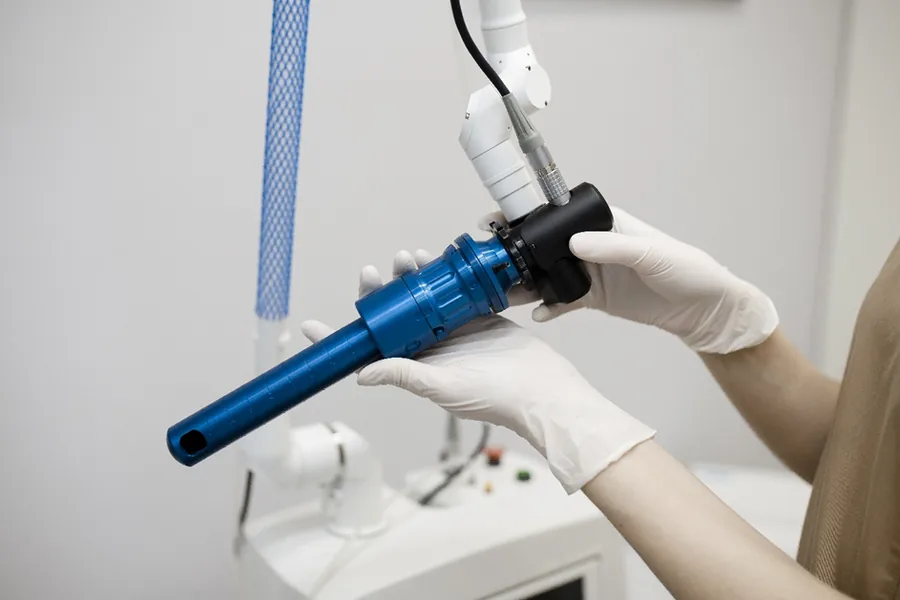
The patient is first positioned on the gynecological examination table. A vaginal speculum is used to visualize the inside of the vagina. To enhance the effect of the laser, the inside of the vagina is dried with gauze. The device you can see in the image is then placed inside the vagina, and a large number of micron-level laser pulses are delivered to the vaginal walls. Because these laser pulses also boost collagen production around the urethra, improvement is observed even in patients with urinary incontinence after the very first session.
There is no need to fast or restrict fluids for this procedure. No anesthesia is required either, because the inside of the vagina does not perceive the laser pulses as painful. The procedure takes about 10-15 minutes. Afterwards, patients can return to their daily lives without avoiding their normal activities. A dark-colored discharge during healing is normal, and avoiding intercourse for 7 days is recommended to give the tissue time to heal. After 7 days, intercourse can be resumed.
Two sessions spaced 1 month apart are usually recommended. In some cases, up to 3-4 sessions may be needed. For a lasting effect, laser treatment can be repeated every year.
The effect of the procedure begins to be felt by both partners after about 3 weeks. The best effect is achieved within 3-4 weeks after the second session.
The Effect of Laser Beams on the Vagina
This is how laser beams transform the vaginal mucosa.
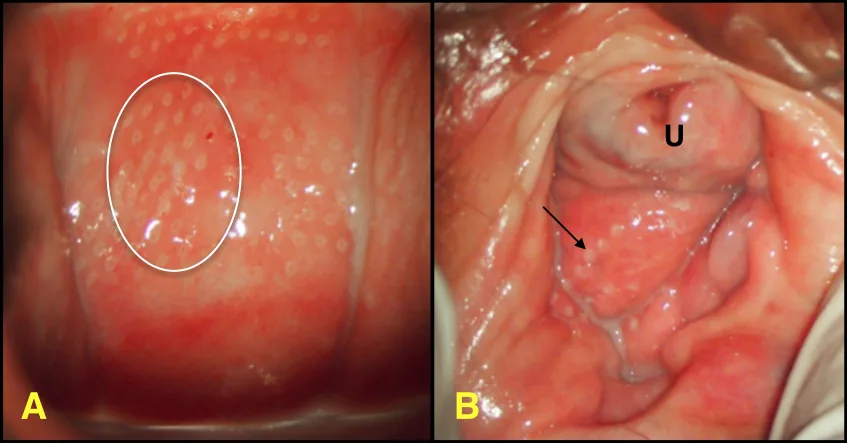
In menopause, vaginal tissue appears under the microscope as shown in image 1 below. As you can see, the upper layer of the vaginal mucosa has thinned. Let us apply laser to this tissue and look under the microscope again (image 2).
The laser beams produced a degree of denaturation in the tissue; let us look again 30 days after the procedure (image 3). We can see how the upper layer of the vaginal mucosa has been renewed. Placing the two photographs side by side makes the change even clearer (image 4).
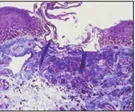
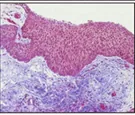
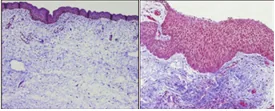
Before and After: Observing the Change
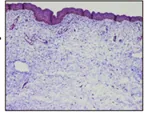
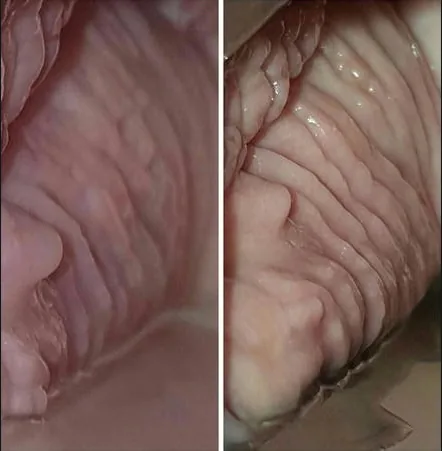
Now let us look with the naked eye. This is how the effect of the laser beams appears in the vagina.
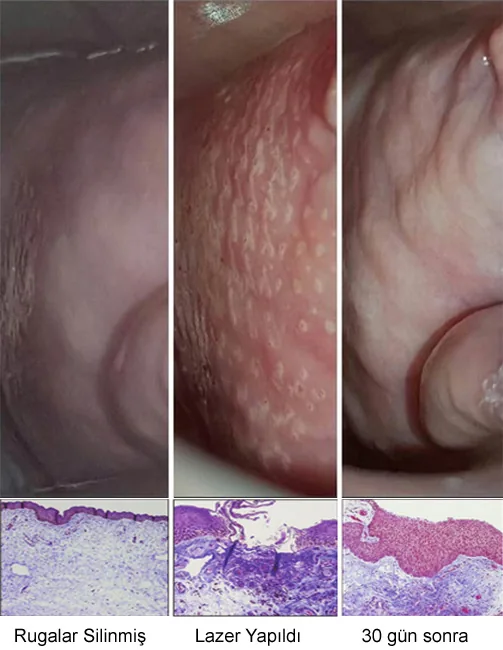
The Change After Two Sessions
Another Patient
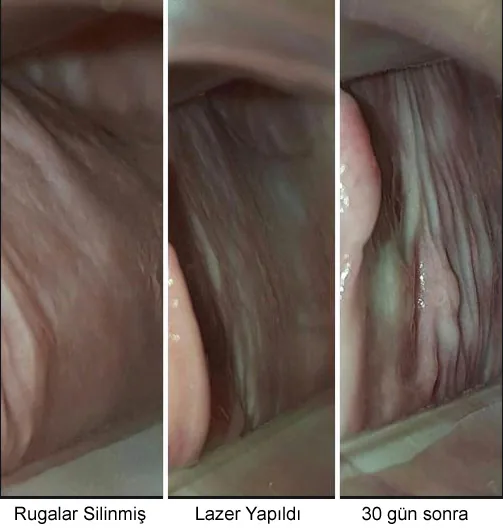
Until about ten years ago, vaginal tightening operations were considered unnecessary even by doctors. But women, troubled by the loss of pleasure during intercourse caused by a lax vagina, began to attach much more importance to vaginal tightening. In this context, vaginal tightening performed with the fractional laser largely fulfills these expectations.
You May Also Be Interested In: Vaginal Rejuvenation
The fastest-growing branch of gynecology is cosmetic gynecology, that is, aesthetic surgery of the genital area. Many names have been coined to describe these operations. One of the best known is vaginal tightening, a term that covers both vaginoplasty (surgical narrowing of the vagina) and laser vaginal tightening. Read more
Appointments and Information
You are welcome to contact us at any time to ask questions about laser vaginal tightening or to book a consultation.
Book via WhatsApp Call Now